
A practical guide to getting your peace and quiet back without starting a neighborhood feud:
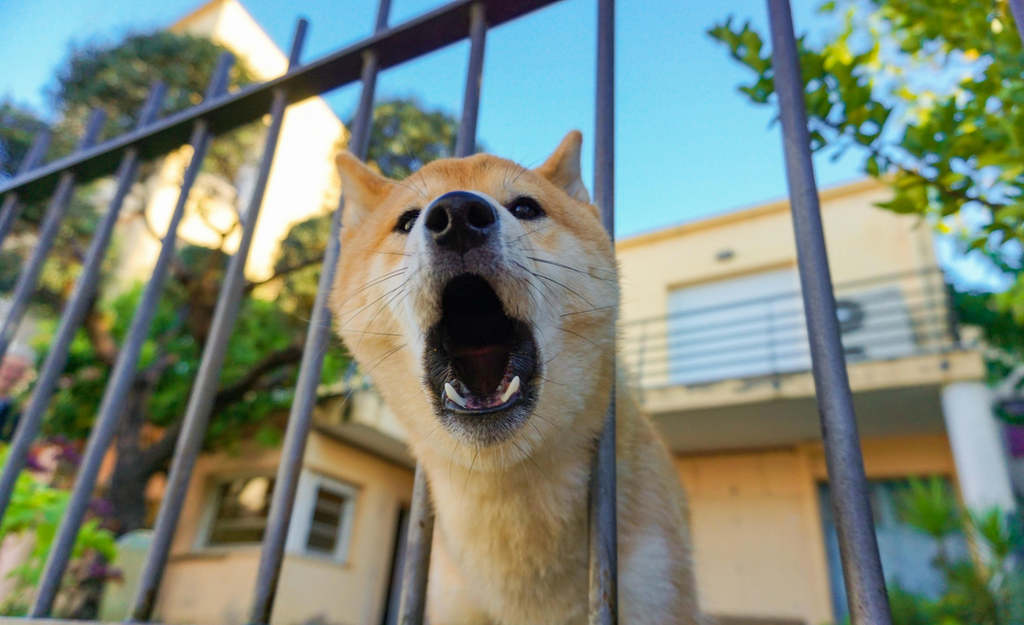
A barking dog next door can go from a minor annoyance to a major disruption surprisingly quickly. Whether the barking wakes you up at night, interrupts your workday, or makes it difficult to enjoy your backyard, you don’t necessarily have to simply live with it.
The good news is that there are several practical ways to address a neighbor’s barking dog without immediately turning the situation into a neighborhood dispute.
Before filing a noise complaint, start with these steps.
Why Does Your Neighbor’s Dog Keep Barking?
Dogs bark for many different reasons, and figuring out what is triggering the barking can help you decide what to do next.
Boredom or Attention Seeking
Dogs are social animals. A dog left alone for long periods may bark because it is bored, lonely, or looking for attention.
If the barking primarily happens while your neighbor is away, boredom could be contributing to the problem.
Territorial or Alarm Barking
Does the dog start barking every time someone walks down the sidewalk, a delivery arrives, or you step into your backyard?
The dog may be reacting to people, animals, vehicles, or activity around what it considers its territory.
Separation Anxiety or Distress
Persistent barking, whining, pacing, destructive behavior, or other signs of distress while an owner is gone can sometimes be associated with separation-related problems.
That’s something the dog’s owner may need to address with a veterinarian or qualified dog behavior professional.
1. Keep Track of When the Dog Is Barking
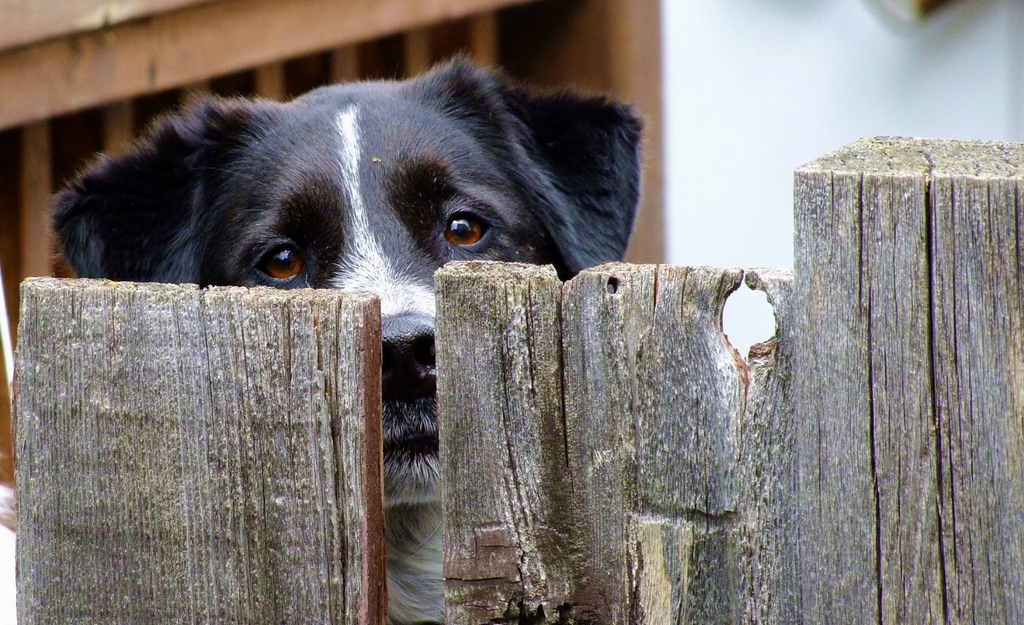
Before talking with your neighbor, spend a few days documenting the problem.
Write down when the barking begins, approximately how long it lasts, and anything that appears to trigger it.
You might discover a pattern. Perhaps the dog barks every weekday after its owner leaves for work, whenever delivery vehicles arrive, or whenever people enter neighboring yards.
Having specific information makes it much easier to have a productive conversation with your neighbor.
2. Talk to Your Neighbor
Your neighbor may not even realize their dog is barking.
If the barking primarily occurs while they’re at work or away from home, they might have no idea how frequently it happens.
Approach the conversation calmly and explain what you’ve noticed. Instead of simply saying, “Your dog barks constantly,” give them useful information about when the barking occurs and approximately how long it lasts.
3. Reduce Whatever Is Triggering the Barking
Sometimes the solution can be surprisingly simple.
If the dog barks whenever it sees you, your family, or your pets in the backyard, reducing its view may help.
Privacy fencing, screening, shrubs, or other visual barriers can sometimes reduce territorial barking by removing the visual trigger.
4. What If You’ve Tried That and the Barking Still Won’t Stop?
Consider a Humane Ultrasonic Bark Control Device
If you’ve tried working with your neighbor and the barking continues, an ultrasonic bark-control device provides another option.
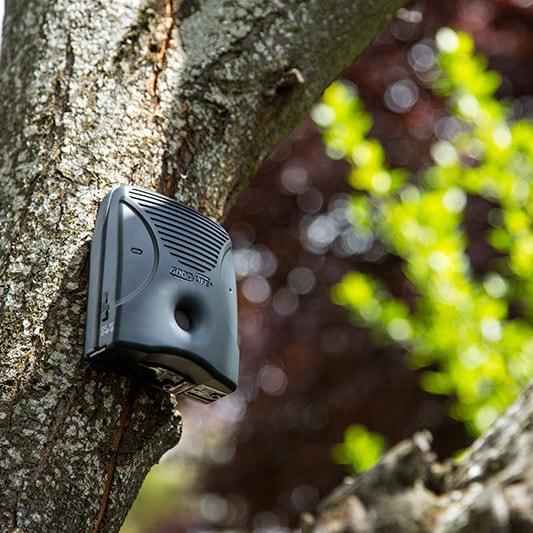
Instead of putting something on the dog, the Dog Silencer® MAX can be positioned on your property and directed toward the area where the barking occurs.
When the device detects barking, it automatically produces ultrasonic sound designed to interrupt the barking behavior.
There are no shock prongs, no collar and nothing that needs to be placed on your neighbor’s dog.
Designed for barking dogs up to 300 feet away
The Dog Silencer MAX produces ultrasonic sound up to 300 feet away with clear line of sight. Its microphone can automatically detect barking from up to 75 feet away, and the included remote provides manual activation from up to 75 feet away.
How Does the Dog Silencer MAX Work?
1. Position it toward the barking dog.
Place or mount the MAX so it has a clear path toward the area where the dog spends its time.
2. The MAX detects barking.
Its built-in microphone can automatically detect barking from up to 75 feet away.
3. The device responds.
It produces a high-frequency ultrasonic sound intended to interrupt the unwanted barking behavior.
4. The dog learns the connection.
Consistent use helps the dog associate unnecessary barking with the ultrasonic response.
The MAX’s ultrasonic signal can reach up to 300 feet, but solid objects such as walls, solid fences, windows and dense shrubbery can block ultrasonic sound.
Where Should I Put It?
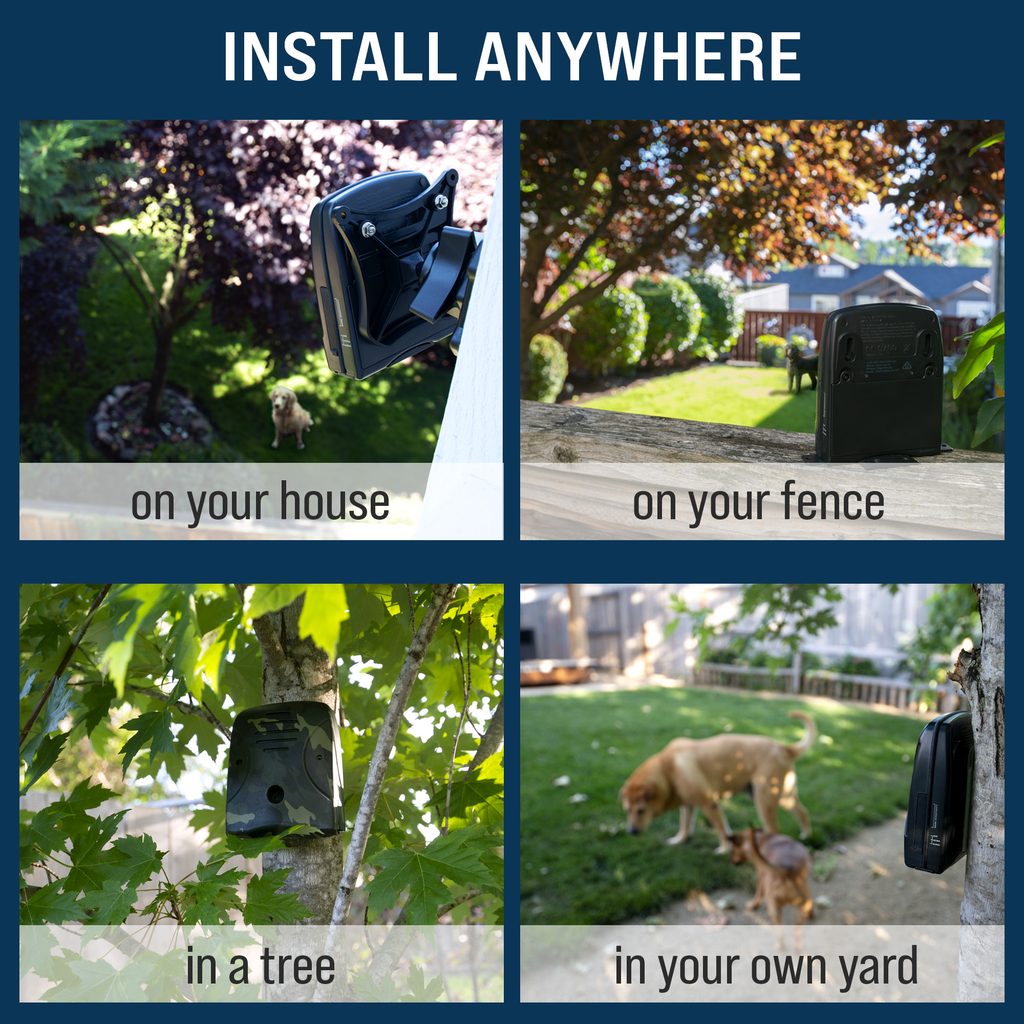
Placement matters. Point the device toward the barking area and maintain as clear a line of sight as possible.
If a solid fence blocks the path, mounting the MAX high enough to project over the fence can help provide a clearer path toward the dog.
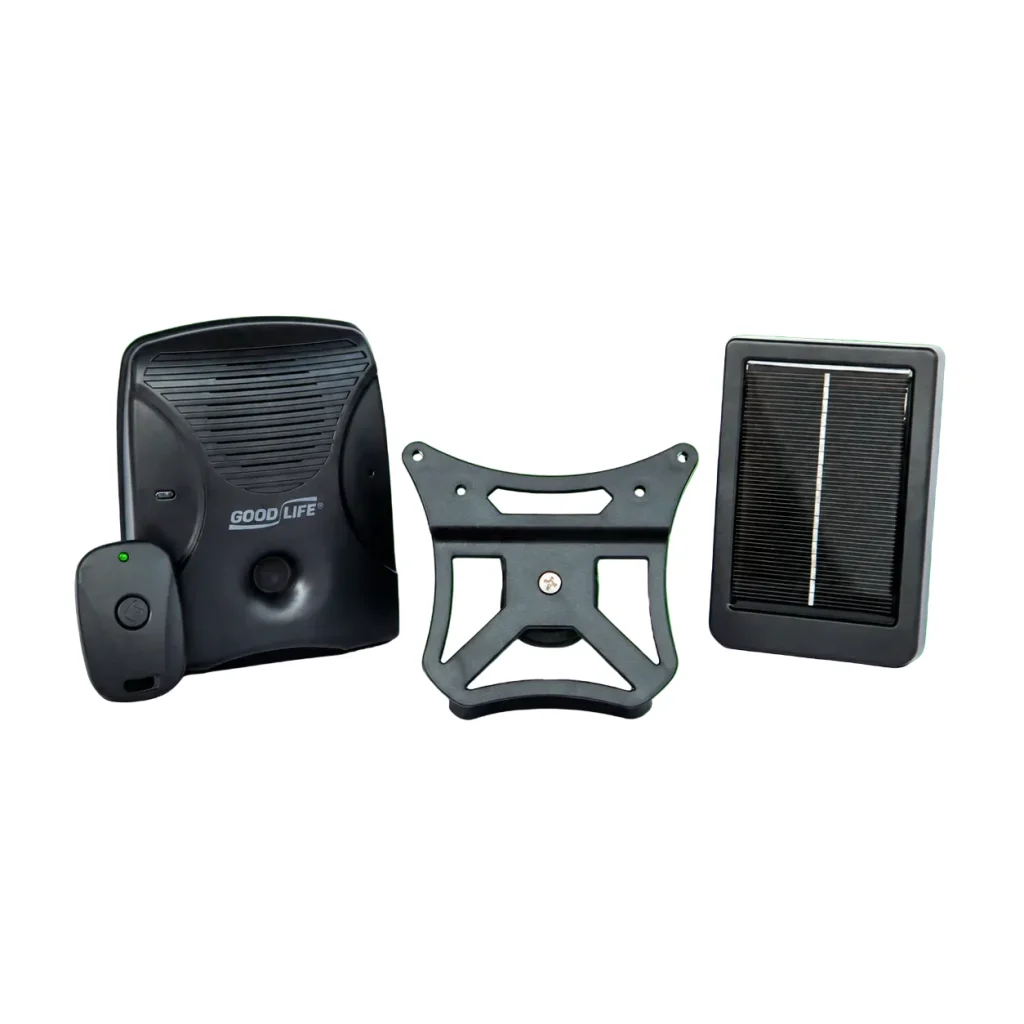
No Outlet Nearby? Add Solar Power.
The Dog Silencer MAX can also be paired with Good Life’s optional solar panel, reducing dependence on disposable batteries or running long power cords across the yard. The current solar panel is designed for the Dog Silencer MAX and Bark Control Pro.
How Long Does It Take to Reduce Barking?
Every dog is different.
Some dogs may respond within several days, while more persistent barkers can require two to three weeks of consistent training, according to Good Life’s current product guidance.
Consistency matters because the dog needs an opportunity to make the connection between barking and the ultrasonic response.
The goal isn’t to prevent a dog from ever barking. Barking is normal canine communication. The goal is to help reduce excessive or unnecessary barking that has become disruptive.
When Is It Time to File a Noise Complaint?
A noise complaint should generally be a later step rather than the first one.
If you’ve made reasonable attempts to resolve the problem and the barking continues, check your local noise and animal-control ordinances.
Depending on where you live, excessive barking complaints may be handled by animal control, a city or county agency, law enforcement, a homeowners association, landlord, or property manager.
Keep the barking log you created earlier. Dates, times and duration can help document an ongoing problem.
You Have Options When the Dog Next Door Won’t Stop Barking.
A neighbor’s barking dog doesn’t necessarily have to become a battle between neighbors.
Start by identifying when and why the dog is barking. Talk with your neighbor when possible, reduce obvious triggers and consider humane training solutions before escalating the situation.
And if distance makes traditional training impossible, the Dog Silencer MAX was designed specifically to provide no-shock bark control from a distance.
Ready to Get Your Peace and Quiet Back?
Meet our line up: First time buyers get 10% off!
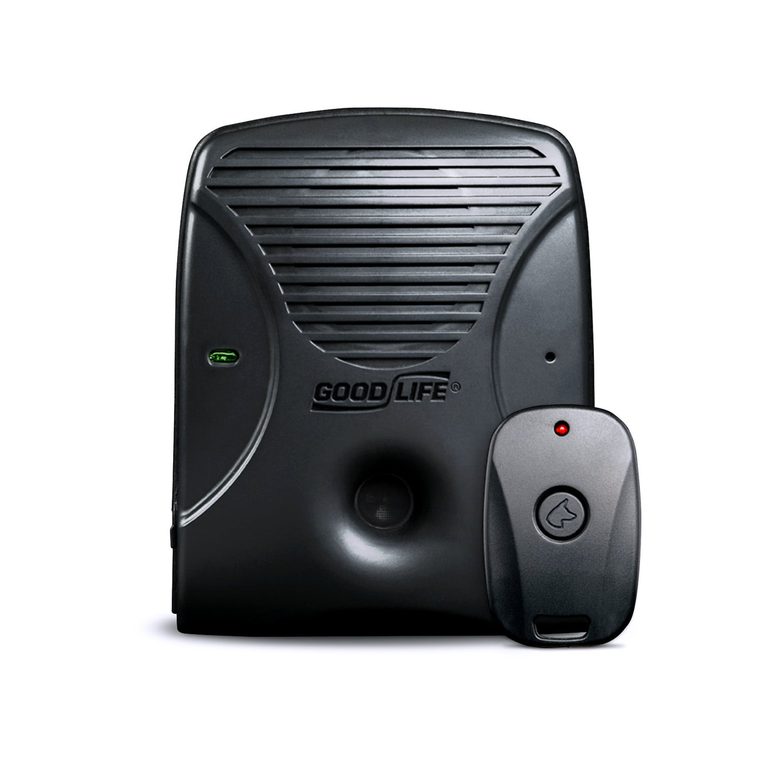
Dog Silencer® MAX
✓ Up to 300 ft ultrasonic range
✓ Automatic bark detection up to 75 feet
✓ Included keychain remote
✓ No shock
✓ Indoor or outdoor use
✓ Optional solar power
✓ 1-year manufacturer’s warranty
✓ 60-day money-back guarantee
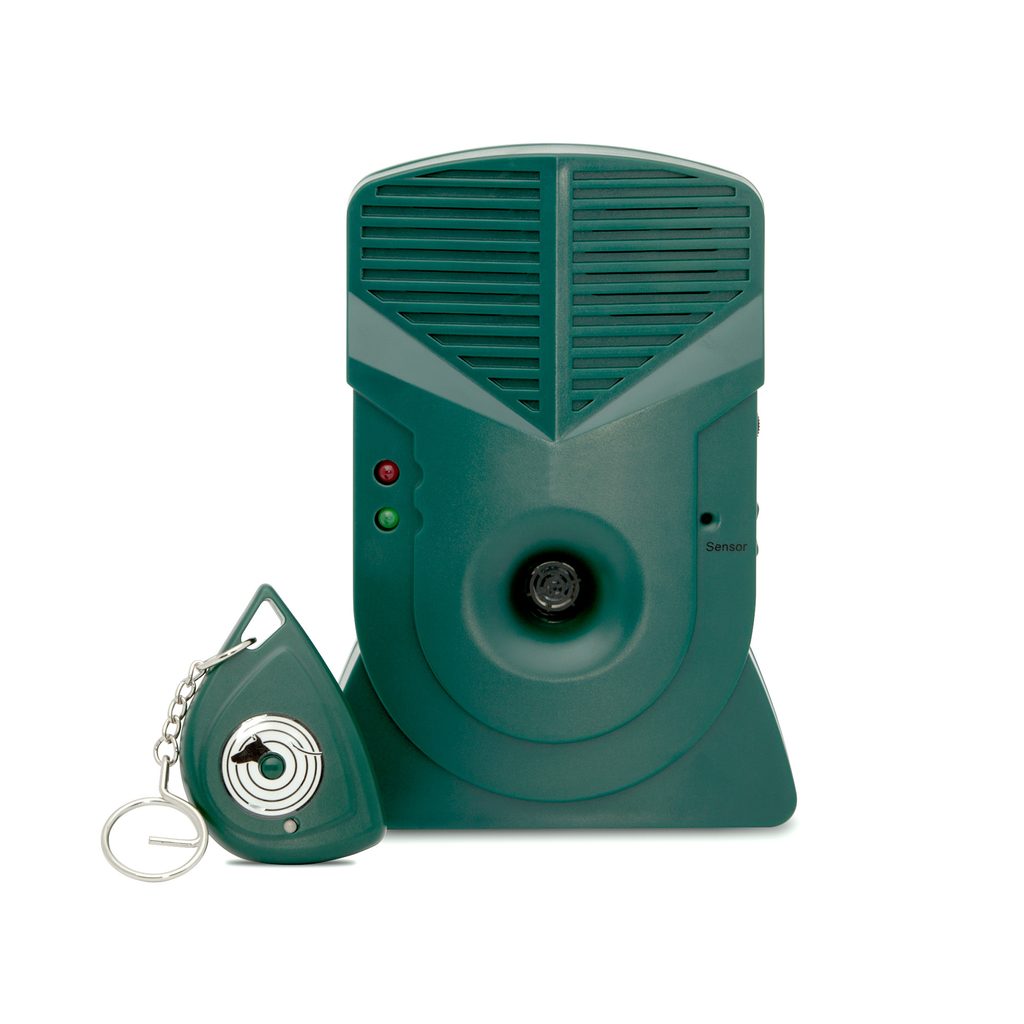
Bark Control Pro™
✓ Up to 150 ft ultrasonic range
✓ Automatic bark detection
✓ Adjustable sensitivity
✓ Optional solar panel
✓ Ultrasonic & audible modes
✓ Indoor & outdoor use
✓ 1-year manufacturer’s warranty
✓ 60-day money-back guarantee